

Last Updated: November 19, 2026
Quick Summary
Choose a mandala spiral notebook by matching size, paper, binding, and page count to how you draw. Pick a 6" x 8" spiral that lies flat, has smooth low show-through paper, and a double-O wire binding. Our notebooks offer 120 lined pages, a thick paper cover, and an inside back pocket.
- A5 or 6" x 8" suits commuters and fits comfortably in a bag.
- Test paper with a five-minute swatch of your usual fineliner, pencil, and marker.
- A 120-page notebook suits a few months of regular practice.
- Left-handed artists often prefer top-bound or right-edge coils.
- Check that the coil springs back and the book folds back flat.
Table of Contents
- Start with the Size: A5 Spiral Notebook and Portability
- Paper Quality and Page Layout for Drawing Mandalas
- Spiral Notebook vs Bound Journal: Which Binding Suits Your Practice?
- How Many Pages Do You Need? The Spiral Notebook 500 Pages Option
- Binding Durability and Spiral Placement for Drawing Comfort
- Cover, Closure, and Extras: Protecting Finished Mandalas
- Checklist: Evaluate and Select Your Mandala Spiral Notebook
- Find Your Mandala Spiral Notebook at I Love Mandalas
- Frequently Asked Questions
Start with the Size: A5 Spiral Notebook and Portability
A spiral notebook that fits in a bag and still gives your hand room to work is the practical choice for daily mandala practice.
Too small and your circles crowd the edges. Too large and the notebook stays home, which defeats the purpose of a calming daily practice.
A few size realities to weigh:
- A5 suits commuters, students, and anyone journaling on a lunch break
- A4 gives more drawing space but rarely travels well
- Pocket sizes work for quick sketches, not full mandalas
- Thicker notebooks add weight, so check page count against portability
If you plan to draw on the train or in a waiting room, hold the notebook in one hand before buying. If it flops open or drags, it is too big for the way you actually use it.
Paper Quality and Page Layout for Drawing Mandalas
Paper quality is the single biggest factor in how a notebook performs with art materials, and mandala work stresses paper in specific ways: repeated radial linework, heavy ink coverage near the center, and constant page rotation. Thin paper lets ink bleed through, ghosts under markers, and buckles when you erase. A notebook for drawing mandalas needs paper that takes repeated linework without tearing and holds a clean edge under a fineliner.
Look for these signs of decent stock:
- Pages that feel smooth, not fuzzy, under a pen
- Minimal show-through when you hold a page to the light
- Enough tooth for pencil but not so much that fine liners snag
- A consistent weight across the whole book, not just the first few pages
How paper behaves with common mandala media
Most practitioners find that paper performance varies sharply by medium, so test before you commit to a full book:
- Fineliners and gel pens: Smooth, sized paper prevents feathering along radial lines. Cheap absorbent stock makes fine lines spread and look fuzzy at the center where strokes converge.
- Colored pencils: A little tooth helps pigment grip, but too much texture breaks pencil points on tight curves. Burnishing and layering work best on medium-tooth stock.
- Markers (alcohol and water-based): Alcohol markers usually bleed through most notebook paper; plan for a blotter page or accept show-through on the reverse. Water-based markers feather more on absorbent paper.
- Watercolor and wet media: Standard spiral notebook paper is rarely sized for water; light washes may buckle and bleed. If you paint, choose a heavier stock or keep wet media to a separate pad.
- Erasers and correction: Repeated erasing on thin paper pills the surface and can lift fibers, so test an eraser in a corner before working a full design.
A simple swatch test before committing: on a spare page, draw a tight spiral with your usual fineliner, color a small patch with each pencil and marker, then flip the page and check for bleed-through, ghosting, and feathering. Note whether the paper buckles after a light wash. This five-minute test tells you more than any weight number printed on the cover.
Page layout for mandala work
Page layout matters as much as paper. Ruled pages suit journaling and reflection. Blank pages give your compass and circles room to breathe. Grid or dot grid helps if you like measuring symmetry.
For mandala-specific layout, consider:
- Center-point placement: A faint dot grid makes it easy to mark a true center before drawing concentric rings; blank pages require you to measure or fold to find center.
- Pre-printed guides and templates: Some notebooks include light mandala templates or center guides. They speed up symmetry but can restrict freehand work; choose a book whose guides are light enough to ignore when you want to draw freehand.
- Margins and usable area: Check how close the printed area runs to the coil and page edge. Mandalas need breathing room; a page with wide margins reduces usable drawing diameter even if the overall size looks generous.
- Page rotation: Blank pages rotate freely under your hand; gridded pages can help you keep orientation when you turn the book, but strong grids may show through light coloring.
If you want to build drawing skills alongside your notebook practice, a live mandala doodles drawing class can help you get more from every page.
Spiral Notebook vs Bound Journal: Which Binding Suits Your Practice?
The spiral notebook vs bound journal question comes down to how you draw.
For mandala work, that flat surface is a real advantage. You rotate the page constantly to keep curves even, and a spiral lets you do that without cracking a spine.
Spiral binding pros:
- Lies flat or folds back fully
- Easy page turning mid-drawing
- Usually lighter and cheaper
Spiral binding cons:
- Wires can bend and catch on fabric
- Pages can tear near the coil over time
- Less protection for finished work
If you plan to archive finished mandalas for years, a bound journal may serve you better. For daily practice and active drawing, a spiral notebook is a practical choice.
If you are still weighing formats, our comparison of the best mandala journals for daily reflection breaks down more options.
How Many Pages Do You Need? The Spiral Notebook 500 Pages Option
Page count should match your rhythm, not your ambition. A spiral notebook 500 pages option sounds generous, but thick books are heavy and the binding carries more strain. Most people do better with a moderate book they finish and replace.
Ask yourself three questions:
- How often will you draw? Daily practice fills pages fast.
- Will you write reflections too, or draw only?
- Do you want one book per season, or one that lasts a year?
A 120-page notebook, like the ones we carry, suits a few months of regular practice. A 500-page book suits someone who draws daily and dislikes switching books. The trade-off is weight and coil stress.
Binding Durability and Spiral Placement for Drawing Comfort
Binding durability determines whether your notebook survives being carried, folded, and drawn in daily. Check the coil itself: a double-O wire binding holds its shape better than a simple spiral, and tightly crimped ends stop wires from snagging.
Spiral placement affects comfort more than buyers realize, especially for mandala work where you rotate the page constantly to keep curves even. The coil is not just a hinge; it is an obstacle your hand and wrist negotiate on every stroke.
Coil position and handedness
- Left-edge coil, right-handed artist: The most common setup. Your drawing hand rests on the page away from the wire, and the book folds back so the coil sits on the left. This works well for most right-handed drawers.
- Left-edge coil, left-handed artist: Your hand crosses the coil or rests on it, which can smudge ink and catch your sleeve. Left-handed artists often prefer a top-bound or right-edge coil so the wire stays out of the drawing path.
- Top-bound coil: Good for both handedness because the coil sits above the drawing area, but the book is taller in use and may not fold back as compactly on a small desk.
- Right-edge coil: Less common, but useful for left-handed artists who want the wire away from their hand.
If you cannot find your preferred placement, choose a notebook with a coil that sits flush and does not protrude, so your wrist can pass over it without snagging.
Fold-back behavior and page rotation
Mandala drawing involves turning the page frequently to keep radial symmetry even. A spiral that folds completely back lets you rotate the working page without fighting a spine, and it keeps the unused half of the book out of your way.
Watch out: a coil that folds back stiffly or springs open can drag the page out of position mid-stroke, so test the fold-back action before you buy. A notebook that will not stay flat at your working angle will frustrate you within a week.
Quick durability checks before you buy
- Squeeze the coil gently; it should spring back, not stay bent
- Flip every page once; none should catch or tear
- Check the cover attachment at the spine
- Confirm the notebook folds back flat without cracking
- Rotate the open book 90 degrees as if turning a mandala; the coil should not catch your hand
A notebook that fails any of these will frustrate you within a week.
Cover, Closure, and Extras: Protecting Finished Mandalas
A thick printed cover does more than look good. It stiffens the notebook so pages stay flat and finished mandalas avoid creasing in a bag.
Extras worth having:
- An inside back pocket for loose sketches, reference cards, or a pen
- A medium-gray or dark back cover that hides smudges
- A closure band or elastic if you carry the book loose in a bag
Our own spiral notebooks include a thick paper front cover and an inside back pocket for storing extra paper and pens. For finished pieces you want to keep pristine, consider slipping them into a sleeve or photographing them before the pages age.
Checklist: Evaluate and Select Your Mandala Spiral Notebook
Use this checklist to compare options side by side before you commit.
| Criterion | What to Check | Why It Matters |
|---|---|---|
| Size | A5 or 6" x 8", fits your bag | Portability keeps practice consistent |
| Paper | Smooth, low show-through | Handles ink and repeated linework |
| Layout | Blank, dot grid, or ruled | Matches drawing vs journaling |
| Page count | 120 for regular use, more for daily | Balances weight and longevity |
| Binding | Double-O wire, tight crimps | Survives daily folding |
| Spiral side | Left, right, or top | Comfort for your handedness |
| Cover | Thick front, firm back | Protects finished work |
| Extras | Back pocket, closure | Keeps loose pages and pens together |
Score each notebook from one to five on every row, then add the totals. The highest score is not always the winner; weight your top two priorities heaviest. If you are choosing a gift for someone starting fresh, our mandala gifts for new beginnings pair well with a notebook.
Find Your Mandala Spiral Notebook at I Love Mandalas
Choosing well comes down to size, paper, binding, and the small details that make daily drawing comfortable. Get those right and the notebook becomes a genuine part of your practice, not another pretty object that fades into the background.
Our spiral notebooks feature original mandala art by Kathy Rausch on a thick paper cover, 120 lined pages on both sides, and an inside back pocket for storing extra paper and pens. Each design carries a spiritual theme, from The Circle of Life Relationships to Ever Changing Always Changing, so the cover itself becomes a daily reminder of growth and connection.
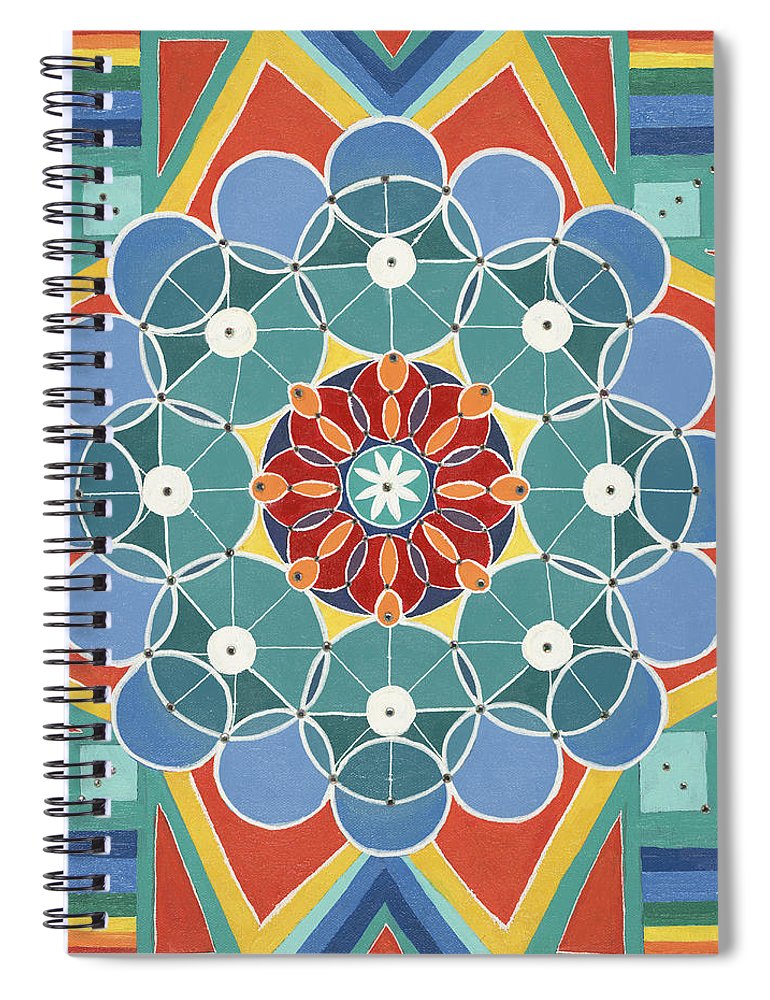
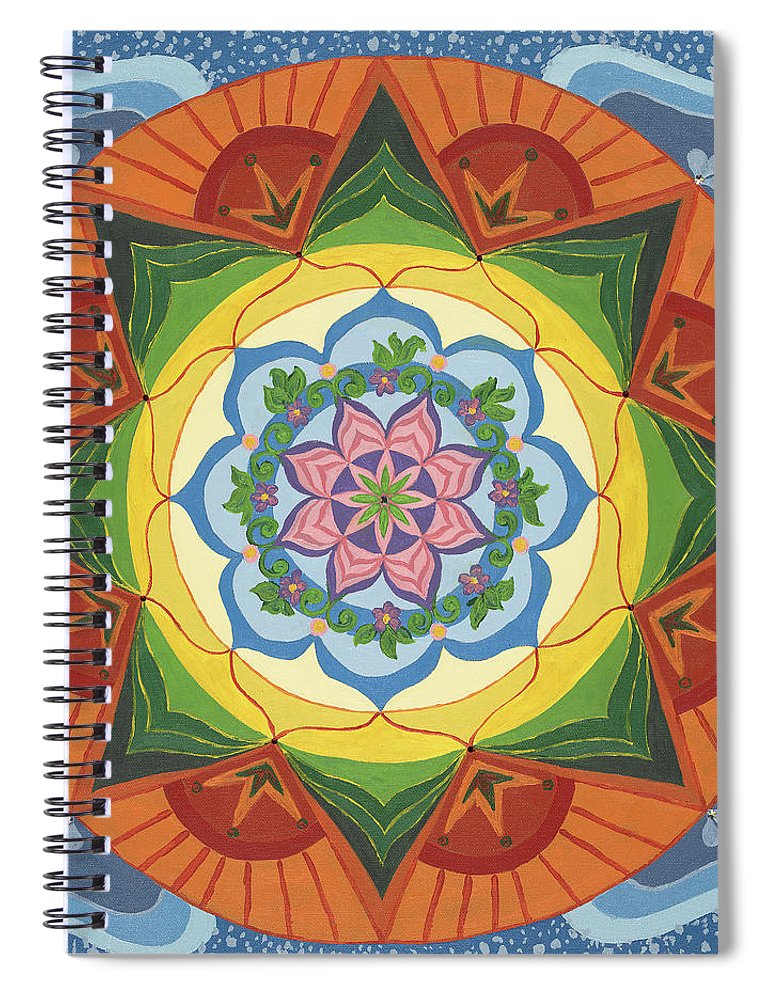
Ready to make your practice part of every day? Browse our mandala spiral notebooks, pick the design that speaks to you, and start filling pages with calm, creativity, and intention. Get started with I Love Mandalas and turn a simple notebook into a daily ritual of balance and joy.
Frequently Asked Questions
What should I look for when choosing a spiral notebook for mandalas?
Consider the size, the paper, and the page count. A size that gives enough drawing space without being unwieldy suits most people, and Our spiral notebooks have 120 lined pages on both sides.
Is a spiral notebook good for drawing mandalas?
Yes, a spiral notebook can be used for drawing mandalas. Placing your mandala slightly away from the binding edge keeps the coil out of your way.
What paper weight is best for pens and markers in a mandala notebook?
Test a small area with your own pens and markers before drawing a full mandala, since paper performance varies by medium.
How do I choose between a spiral notebook and a bound journal?
A spiral notebook vs bound journal decision comes down to use. If you plan to archive finished mandalas for years, a bound journal may be the better choice; for everyday practice, a spiral notebook is often more practical.
