

Table of Contents
- What Defines Original Mandala Art
- The Labor and Skill Behind Original Artwork
- Materials and Production Quality Make the Difference
- Benefits of Original Mandala Art for Your Space
- How to Identify Authentic Mandala Art
- Mandala Art for Mindfulness and Home Decor
- Value, Longevity, and Your Investment
- Frequently Asked Questions
Last Updated: October 21, 2026
What Defines Original Mandala Art
Original mandala art costs more than mass-produced because it represents a fundamentally different creation process, materials approach, and artistic intent. When you purchase original mandala art, you're acquiring a one-of-a-kind piece created by an artist's hand with intention and spiritual purpose. At I Love Mandalas, we understand this distinction because we work directly with artist Kathy Rausch, whose original designs embody this commitment to authenticity and meaning.

The core difference lies in how original mandala art is conceived and executed. Each piece begins as a unique artistic vision rather than a template designed for mass replication. Original mandalas carry the artist's energy, decision-making process, and creative choices throughout the design. This isn't about adding a signature to an existing print, it's about the entire work being conceived as a singular expression.
Mass-produced mandala art, by contrast, starts with a design optimized for factory reproduction. The artwork is simplified for consistency, scaled for machinery, and printed in identical batches. While these pieces can be beautiful and affordable, they lack the individualized creative journey that defines original work. The distinction matters because original mandala art for mindfulness and home decor serves a different purpose than decorative prints.
Understanding this foundation helps explain why collectors and practitioners value original mandala art differently. The investment reflects not just visual appeal, but the artist's labor, intention, and the piece's uniqueness in your space.
The Labor and Skill Behind Original Artwork
Creating original mandala art requires hundreds of hours of focused, deliberate work that cannot be rushed or automated. An artist developing a single mandala design spends weeks or months in the creative process, researching spiritual symbolism, sketching compositions, refining proportions, and making countless intentional choices about line weight, pattern density, and sacred geometry.
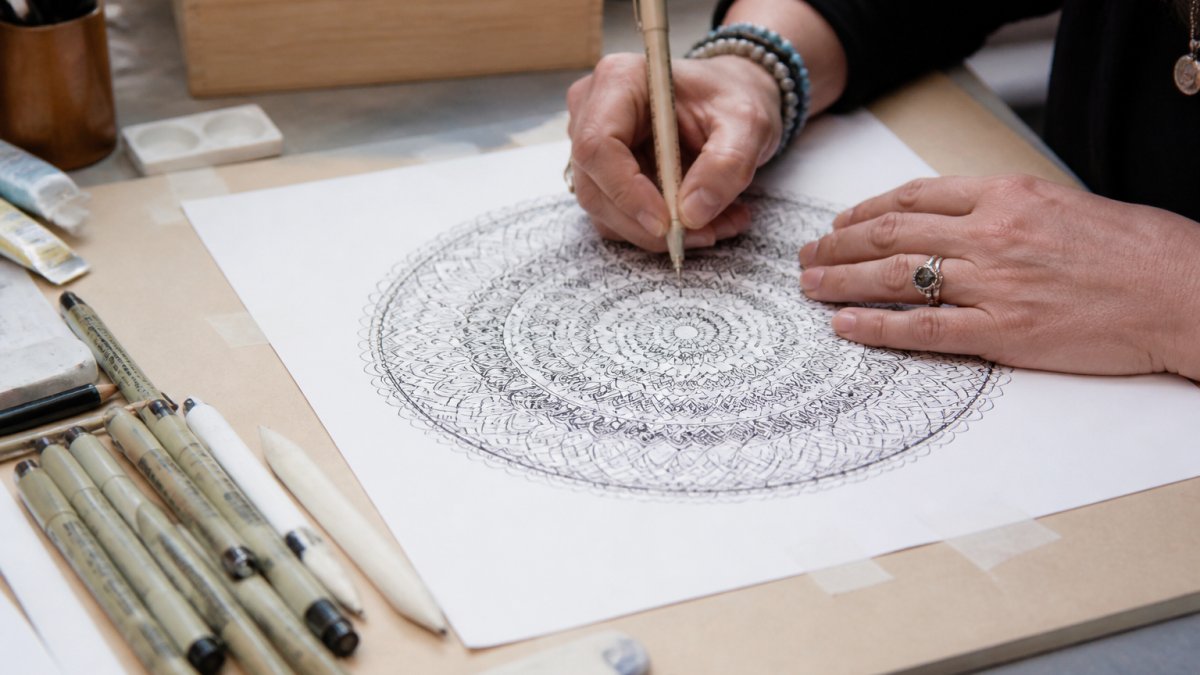
The actual execution phase demands extraordinary precision. A single original mandala painting can take 40-80 hours of continuous work. The artist must maintain consistent hand pressure, steady lines, and perfect symmetry while working inward from the outer circle.
Mass-produced mandalas eliminate this labor entirely. A design is created once, then reproduced infinitely through printing. The reproduction cost per unit drops dramatically after the initial design investment. No artist hand-creates each copy. No individual decision-making occurs during production. The time investment per unit approaches zero.
Beyond execution, original artists invest years developing their craft. They study color theory, sacred geometry, spiritual traditions, and artistic technique. They experiment with materials, develop personal styles, and refine their ability to translate spiritual concepts into visual form. This accumulated skill and experience is embedded in every original piece they create.
Materials and Production Quality Make the Difference
The materials used in original mandala art differ fundamentally from those in mass-produced alternatives. Original artists typically work with premium supplies, high-quality watercolors, archival inks, acid-free papers, and professional-grade pigments designed to last decades without fading or deterioration.
I Love Mandalas uses archival-quality materials specifically because original mandala art deserves preservation-grade production. Our art prints are produced on acid-free papers using archival inks to guarantee that they last a lifetime without fading or loss of color.
Mass-produced prints often use commercial-grade inks and standard papers optimized for cost rather than longevity. These materials may fade within 5-10 years, especially in sunlight. The difference isn't always visible immediately, but over time, original artwork maintains its vibrancy while mass-produced pieces diminish.
Consider the substrate itself. Original artists often paint on canvas, specialty papers, or wood surfaces chosen for their aesthetic and durability properties. Each substrate interacts with the medium differently, watercolor on handmade paper behaves differently than on commercial stock. Mass-produced pieces use standardized materials selected for factory efficiency, not artistic potential.
Wood prints represent another quality distinction. At I Love Mandalas, our wood prints are created by printing images directly onto 3/4" thick maple wood, then mounting with D-clips for display. This production method creates texture and depth impossible with paper alone. The wood substrate adds dimensional quality that flat prints cannot achieve.
Benefits of Original Mandala Art for Your Space
Original mandala art transforms your environment in ways mass-produced pieces cannot replicate. When you live with authentic, handcrafted work, you're surrounded by intentional creative energy. The artist's spiritual purpose, embedded during the creation process, remains present in the finished piece. For practitioners of mindfulness and meditation, this energetic quality matters significantly.
The uniqueness of original mandala art creates psychological benefit. You know no one else owns your exact piece. This exclusivity strengthens your connection to the work. You're not one of thousands with identical prints; you're the sole guardian of that particular artistic expression. This distinction reinforces the sense of personal meaning the piece carries.
Original mandala art also supports your aesthetic environment more authentically. When a piece is created by an artist who understands sacred geometry, spiritual symbolism, and design principles, every element serves a purpose. The composition draws your eye inward toward the center, mirroring the meditative journey. The color choices evoke specific emotional states. The symmetry creates visual rest. Mass-produced pieces may replicate these qualities superficially, but original work embodies them intentionally.
For home decor, original mandala art becomes a focal point that elevates the entire room's energy. Visitors sense the difference between authentic artwork and reproductions. The presence of original work signals intentionality, spiritual practice, and refined taste. It transforms your space from decorated to curated.
How to Identify Authentic Mandala Art
Distinguishing original mandala art from mass-produced alternatives requires examining several specific markers. First, look for evidence of the artist's hand. Original work shows natural variation in line weight, subtle asymmetries that reflect human creation, and visible artistic decisions.
Ask about the artist's identity and process. Authentic original mandala art comes with the artist's name, background, and documented creative approach. At I Love Mandalas, Kathy Rausch's designs are attributed directly to her vision and practice.
Evolutionary Man - Art Print →
Examine the materials and production method. Request information about the substrate, inks, and creation technique. Original art uses premium materials; the seller should be able to explain why. Ask whether the piece is hand-painted, hand-drawn, or digitally created then printed.
Check for edition information. Limited edition prints represent a middle ground between fully original and mass-produced work. If a piece is numbered (e.g., "1/25" meaning the first of 25 prints), it's a limited reproduction, not an original. This distinction affects value.
Look for variation between pieces if you're comparing multiple works by the same artist. Original artists develop recognizable styles but create unique compositions. If you find dozens of identical pieces, they're reproductions. If you find variations in design, color, and composition, you're likely viewing authentic original work.
Request documentation of authenticity. Reputable artists and galleries provide certificates of authenticity, artist statements, and creation dates. This documentation protects your investment and confirms the piece's originality and value over time.
Mandala Art for Mindfulness and Home Decor
Original mandala art serves dual purposes: functional spiritual tool and aesthetic home accent. For mindfulness practice, the piece becomes an anchor point for meditation. The circular form naturally guides attention inward, supporting the meditative state. The intricate detail provides focus for concentration practice. When the mandala is original work created with spiritual intention, this function deepens.
The visual impact of original mandala art in your home creates an environment that supports wellbeing. Unlike mass-produced decor that fades into background noise, original pieces command attention and presence. They remind you daily of your spiritual practice and commitment to inner peace. This constant gentle reminder reinforces mindfulness throughout your day.
Original mandala art also works as a conversation piece that communicates your values to visitors. The presence of authentic spiritual art signals that your home is a space of intention and meaning. It creates an atmosphere of calm and intentionality that guests often comment on. This environmental quality affects everyone in the space, not just the owner.
For those navigating life transitions, original mandala art provides grounding and stability. The symmetry and balance inherent in mandala design offer visual reassurance during uncertain times. The artist's spiritual intention embedded in the piece can serve as a touchstone for your own healing journey. Many people choose specific original mandalas because the design resonates with their current life chapter.
Value, Longevity, and Your Investment
Original mandala art represents a genuine investment in your environment and spiritual practice. Unlike mass-produced pieces that depreciate and fade, original work often maintains or increases in value over time. As the artist gains recognition and their body of work grows, earlier pieces become more sought after by collectors. This appreciation potential doesn't apply to reproductions.
The longevity of original mandala art directly reflects material quality and artistic intention. Pieces created with archival materials and professional technique last decades or centuries with minimal care. Your grandchildren could inherit the piece in excellent condition. Mass-produced prints typically require replacement within 5-10 years as colors fade and materials deteriorate.
Consider the cost-per-year calculation.
| Factor | Original Mandala Art | Mass-Produced Mandala Art |
|---|---|---|
| Lifespan | 30-50+ years | 5-10 years |
| Material Quality | Archival inks, acid-free paper | Commercial inks, standard paper |
| Uniqueness | One-of-a-kind or limited edition | Identical reproductions |
| Artist Attribution | Documented artist with background | Generic or no artist credit |
| Resale Value | Often appreciates | Typically depreciates |
| Mindfulness Function | Enhanced by artistic intention | Primarily aesthetic |
| Cost-Per-Year | $2-5 annually | $3-8 annually |
The decision to invest in original mandala art reflects a commitment to quality, authenticity, and your own wellbeing. You're not simply purchasing decoration, you're acquiring a piece of art created with intention, made to last, and designed to support your spiritual practice.
At I Love Mandalas, our original mandala art by Kathy Rausch embodies these principles. The 8 x 8 inch Grace and Ease Mandala Print is a limited edition piece (only 25 available) created with the intention of emitting the essence of allowing and peace. For those seeking premium quality, we offer the Grace and Ease The Art of Allowing - Wood Print, which brings the artwork to life through texture and added depth on 3/4" maple wood.


The difference between original mandala art and mass-produced alternatives comes down to intention, skill, materials, and longevity. Original work supports your mindfulness practice more effectively because it carries the artist's spiritual purpose. It lasts longer because it uses archival materials. When you're ready to transform your space with authentic, spiritually infused art that nurtures your soul, I Love Mandalas offers original designs crafted by Kathy Rausch to foster a sense of well-being, balance, and joy.
Frequently Asked Questions
What makes original mandala art different from mass-produced prints?
Original mandala art is created by hand with intention and unique design choices by the artist. Each piece reflects the creator's vision, skill, and spiritual intent. Mass-produced art uses the same digital template repeatedly, printed at scale. Original artwork involves individual line work, detail variation, and materials chosen by the artist, factors that mass production standardizes and eliminates. This uniqueness directly affects how the art resonates with you and its lasting value.
How do I identify authentic mandala art versus reproductions?
Authentic original mandala art comes directly from the artist or verified galleries and carries documentation of its creation. Check for artist signatures, limited edition numbers, and certificates of authenticity. Examine the materials: original pieces use quality papers with archival inks or premium surfaces like wood. Ask about the artist's background and creative process. Reproductions typically lack artist documentation, use lower-cost materials, and are produced in unlimited quantities. I Love Mandalas pieces, for example, feature acid-free papers and archival inks designed to last a lifetime without fading.
Does original mandala art actually reduce stress, or is it just decoration?
Original mandala art engages both your visual and spiritual senses in ways mass-produced pieces often don't. The artist's intention, unique design, and quality craftsmanship create a deeper connection to the work. When you live with art that was thoughtfully created, not mass-produced, you're more likely to notice details, reflect on symbolism, and experience the calming effect. The circular form and symmetry of mandalas naturally draw focus, supporting mindfulness practices. Quality matters: art made with intention and archival materials becomes a lasting reminder of peace, not something you stop noticing after a week.
Is the higher price of original mandala art worth the investment?
Original work uses durable materials, archival inks, quality papers, premium surfaces like maple wood, that last decades without fading or deterioration. You're investing in the artist's skill, the unique design, and materials built to endure. When you choose pieces like those from I Love Mandalas, you're acquiring something with lasting spiritual and aesthetic value.