

Table of Contents
- How to Choose Spiritual Wall Art for Modern Living: A Complete Framework
- Understanding Spiritual Wall Art and Its Role in Your Home
- How to Choose Wall Art for Your Home: Matching Style and Aesthetics
- Spiritual Wall Art Ideas: Color, Format, and Design Selection
- Wall Art Size and Placement: Practical Measurements and Hanging Guidelines
- Creating a Peaceful Meditation Space at Home with Spiritual Art
- Materials, Durability, and Quality Considerations
- Conclusion: Bringing It All Together
- Frequently Asked Questions
Last Updated: October 19, 2026
How to Choose Spiritual Wall Art for Modern Living: A Complete Framework
Choosing spiritual wall art for modern living requires balancing personal meaning with aesthetic harmony.
The challenge is finding spiritual wall art that feels authentic to your beliefs while complementing contemporary design, something meaningful that doesn't clash with your minimalist sofa or look out of place in a modern apartment.
This guide covers style alignment, color coordination, sizing, placement, symbolism, and materials that ensure your investment lasts.
Understanding Spiritual Wall Art and Its Role in Your Home
Spiritual wall art is any piece that carries symbolic meaning related to faith, meditation, mindfulness, or personal growth, from mandalas and lotus imagery to abstract spiritual designs and religious iconography.
Many assume spiritual art has to look "new age-y" or clash with modern decor.
Spiritual wall art that transforms a room versus art that gets ignored comes down to three factors:
- Does it align with your actual aesthetic?
- Does it carry personal meaning you connect with?
- Is it sized and placed correctly for your wall?
When these align, the piece becomes something you appreciate daily, not decoration that fades into the background.
How to Choose Wall Art for Your Home: Matching Style and Aesthetics
The first step is determining your design style. Look at your room honestly: what style dominates, minimalist, contemporary, eclectic, bohemian, or traditional? Your spiritual wall art should feel like it belongs, not like an afterthought.
Selecting Modern and Minimalist Designs
Modern and minimalist spiritual art uses clean lines, limited color palettes, and simple geometric forms, line art mandalas, abstract spiritual designs, or single-color imagery. These pieces don't compete with your decor: a minimalist spiritual wall art piece in black ink on white paper or a single-color canvas fits seamlessly into contemporary living rooms.
Look for designs that emphasize:
- Clean geometric shapes and symmetry
- Limited color schemes (monochrome, two-tone, or three complementary colors)
- Negative space
Minimalist spiritual art creates visual calm, keeping your room serene instead of overwhelming.
Balancing Spiritual Meaning with Contemporary Aesthetics
Most people struggle to find spiritual wall art that feels genuinely spiritual without looking dated or overly ornate. The solution: pieces that blend sacred symbolism with modern design. A mandala in sage green and cream, deep navy and gold, or warm terracotta and white carries spiritual meaning while fitting modern living rooms.
Look for spiritual wall art that:
- Uses contemporary color palettes (not just traditional golds and jewel tones)
- Employs clean design principles even if the imagery is ornate
- Balances complexity with breathing room on the canvas
The key insight most guides miss: your spiritual beliefs don't require your decor to look spiritual. A piece can be deeply meaningful while looking like it belongs in a modern apartment.
Spiritual Wall Art Ideas: Color, Format, and Design Selection
Once you've identified your style, focus on color, format, and overall design direction.
Choosing Colors That Complement Your Room's Palette
Your room already has a color scheme, whether designed or evolved. Your spiritual wall art should complement or intentionally contrast with it. Identify your room's dominant colors:
- Wall color (white, cream, soft gray, warm beige, or bolder)
- Furniture upholstery (gray sofa, tan chairs, black accents)
- Accent colors (throw pillows, rugs, other artwork)
Then choose spiritual wall art using one of these approaches:
Complementary approach: Select art that echoes your room's palette. If your room uses warm cream tones with sage green accents, choose spiritual wall art in those same colors. This creates visual harmony and makes the art feel intentional.
Tonal color approach: Use low-contrast colors that blend rather than pop.
Accent approach: Choose spiritual wall art in a bold color that appears nowhere else in your room. This works if the piece is small or you're intentionally creating a focal point.
Don't choose spiritual wall art based on color alone, color should support the overall design, not fight it.
Selecting Artwork Format: Canvas, Framed Prints, and Unframed Art
The format you choose affects both how the piece looks and how it performs in your space.
Canvas prints offer a contemporary feel and work well in modern living rooms.
Framed prints provide a finished, polished look.
Unframed art prints offer flexibility and a lighter aesthetic, working well in minimalist spaces or when you want art without visual weight.
Consider your room's existing artwork: framed photos on shelves pair well with framed spiritual wall art, while minimal spaces benefit from canvas impact.
| Format | Best For | Visual Weight | Installation |
|---|---|---|---|
| Canvas Print | Modern, contemporary spaces | High | Hooks, hanging wire |
| Framed Print | Curated, gallery-like rooms | Medium-High | Pre-attached hardware |
| Unframed Print | Minimalist, flexible spaces | Low | Adhesive strips, pins |
Wall Art Size and Placement: Practical Measurements and Hanging Guidelines
Size and placement determine whether your spiritual wall art becomes a focal point or disappears into the background.

Determining the Right Size for Your Wall
Most people hang art that's too small, making the wall feel empty and the art like an afterthought. Use this framework:
For a wall above furniture: Your art should be 50-75% the width of the furniture below it. If your sofa is 84 inches wide, your spiritual wall art should be 42-63 inches wide.
For a standalone wall: Your art should occupy 40-60% of the wall's visual space.
Evolutionary Man - Art Print →
For a gallery wall: Individual pieces can be smaller (12-24 inches), but the overall arrangement should follow the 40-60% rule.
Measure your wall before shopping. Many people choose spiritual wall art based on how it looks online, then discover it's either too small or overwhelmingly large in their actual space.
Placement and Hanging Height Best Practices
Where you hang spiritual wall art matters as much as what you hang.
Eye level placement: The center of your art should be 57-60 inches from the floor, natural eye level for most people.
Above furniture: If hanging art above a sofa or console table, maintain 8-12 inches of space between the furniture and the art.
Focal point positioning: Hang spiritual wall art directly across from where you naturally look when entering the room.
Creating a Peaceful Meditation Space at Home with Spiritual Art
Spiritual wall art becomes truly transformative when it's part of a deliberately designed meditation space.
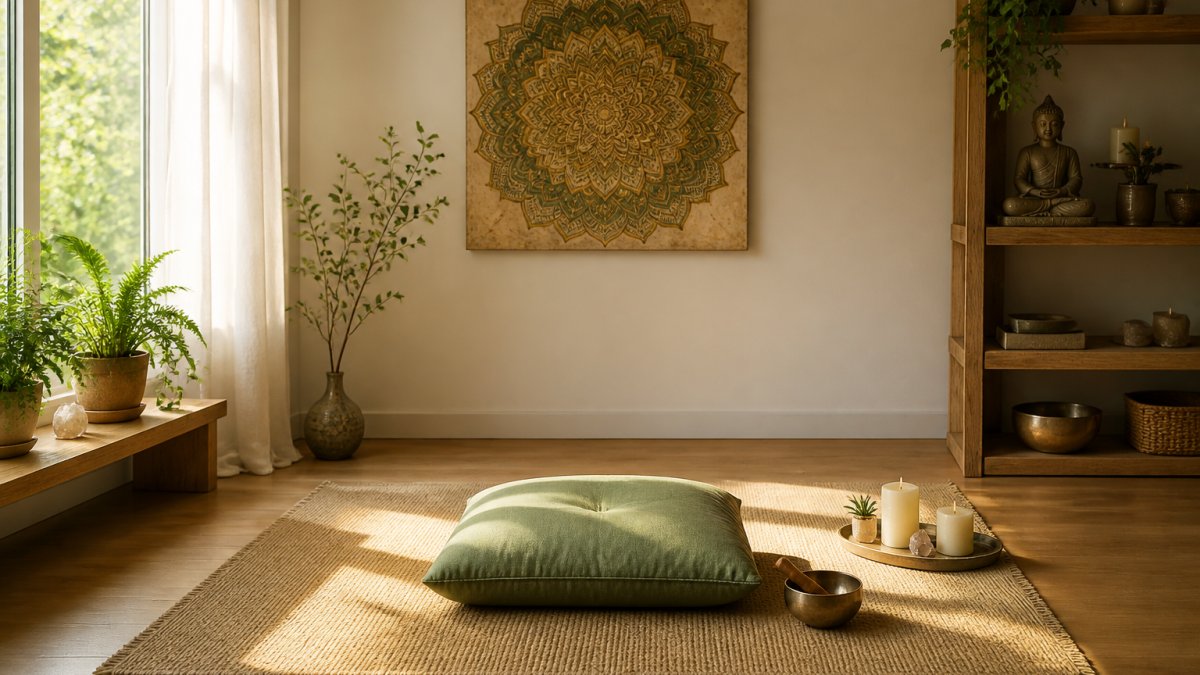
Your meditation space doesn't require a dedicated room. A corner with a cushion, a small table, and your chosen spiritual wall art creates a functional sanctuary.
Evaluating Spiritual Symbolism and Personal Meaning
Before choosing a specific piece of spiritual wall art, understand what the imagery means to you personally.
Different spiritual traditions use different symbols:
- Mandalas represent wholeness, unity, and the cosmos. Circles symbolize completeness. Triangles represent transformation and energy.
- Lotus imagery symbolizes awakening, purity, and spiritual growth. The lotus emerges from muddy water, representing the journey from darkness to enlightenment.
- Sacred geometry (like the Sri Yantra) represents the union of divine masculine and feminine, clarity, vision, and intuition.
The question to ask yourself: Does this piece resonate with where I am spiritually right now?
Spiritual wall art that carries genuine personal meaning affects you differently than beautiful decoration. You notice it. You return to it. It becomes part of your daily reflection practice.
Lighting, Viewing Conditions, and Visual Balance
How light interacts with your spiritual wall art dramatically affects how it performs.
Natural light: Spiritual wall art looks different throughout the day.
Artificial light: Overhead lighting can wash out subtle colors.
Viewing distance: Spiritual wall art with intricate detail (like complex mandalas) should hang where you can see the detail.
Visual balance means the art doesn't compete with other elements.
Materials, Durability, and Quality Considerations
Materials affect both how spiritual wall art looks and how long it lasts. High-quality pieces use archival-grade materials designed to resist fading and deterioration, acid-free paper and archival inks keep your investment vibrant for years (The Deterioration and Preservation of Paper: Some Essential Facts - Collections Care).
When evaluating spiritual wall art, ask:
- Are the inks archival quality?
- Is the paper acid-free?
- Is the canvas museum-quality?
Canvas prints offer durability and texture; framed prints protect art from dust and damage; unframed prints require more care but offer flexibility.
Consider your room's conditions too: direct sunlight fades art faster than indirect light, and a humid bathroom needs different materials than a dry living room.
At I Love Mandalas, our spiritual wall art pieces like the Evolutionary Man Art Print are produced on acid-free papers using archival inks to guarantee they last a lifetime without fading.

Conclusion: Bringing It All Together
Choosing spiritual wall art for modern living means aligning three elements: your personal spiritual beliefs, your room's aesthetic, and your daily life. The best approach combines practical decisions (size, placement, color, format) with genuine spiritual resonance (symbolism, personal meaning, the feeling the piece evokes).
At I Love Mandalas, we create spiritual wall art designed specifically for this balance. Whether you choose a canvas print like Grace And Ease The Art Of Allowing Canvas Print for visual impact or a framed print like Evolutionary Man Framed Print for a polished look, each piece is crafted with archival materials and spiritual intention.

Frequently Asked Questions
How do I choose spiritual wall art that actually fits my modern apartment without looking too 'new age-y'?
Look for minimalist designs with clean lines, neutral color palettes, and contemporary formats like canvas prints or framed art. Spiritual symbolism works beautifully in modern spaces when the design is uncluttered. Mandalas, for example, pair well with minimalist aesthetics because their geometric patterns echo contemporary design principles. Choose artwork with restrained color schemes, sage green, deep navy, warm cream, or gold accents, rather than busy, multicolored pieces. This balance ensures your spiritual wall art complements modern decor rather than dominating it.
What size spiritual wall art should I hang in my living room?
For most living rooms, artwork should cover 50-75% of the wall space above furniture. Measure your wall width and aim for art that's roughly two-thirds that width. Above a sofa, a single large piece (36-48 inches wide) creates a strong focal point, while smaller walls work better with 24-30 inch artwork. Leave 12-18 inches of space from the top of furniture to the bottom of the frame. For gallery walls, space pieces 2-3 inches apart. Start by measuring your wall and the furniture below it, then choose accordingly.
How high should I hang spiritual wall art on my wall?
The center of your artwork should be at eye level, typically 57-60 inches from the floor. Above furniture, hang the art so the bottom of the frame sits 8-12 inches above the top of the piece. This creates visual balance and makes the artwork feel connected to the space rather than floating. If hanging multiple pieces, imagine a horizontal line through the centers and keep them aligned. These measurements ensure your spiritual wall art becomes a natural focal point rather than feeling awkwardly positioned.
Can spiritual wall art actually help me feel less stressed, or will I just stop noticing it after a week?
Spiritual artwork serves as a visual reminder of your intentions and values. Unlike passive decor, pieces with meaningful symbolism, like mandalas representing wholeness and unity, can anchor you during moments of reflection or meditation. The key is intentional placement in spaces where you pause regularly, such as above a meditation cushion or in a reading nook. Original, artist-designed pieces tend to hold meaning longer than generic prints because they carry the creator's intention. Pairing the art with a dedicated peaceful space amplifies its impact beyond pure aesthetics.
Creating a meditation space with intentional spiritual wall art transforms how you experience your home. The right piece becomes part of your daily ritual, something you return to, something that reminds you of what matters. I Love Mandalas helps you find that piece by offering original, spiritually infused designs built to last. Explore our collection and discover how spiritual wall art can enhance your space and nurture your soul.